


A New Approach to Hospital Mergers & Acquisitions
Supporting Healthy, Competitive Hospital Markets
September 2026
A report prepared by Kaufman Hall, a Vizient company, at the request of the American Hospital Association.
Merger and acquisition (M&A) activity among hospitals and health systems has come under increased scrutiny by federal antitrust enforcement agencies in recent years. When challenging transactions, the agencies frequently focus on the potential for price increases following the transaction, likely based on the assumption that the combined organizations will have greater negotiating power with health insurers and the ability to demand higher prices for the services they provide. There are some limitations to this approach, including a failure to account for benefits to government-insured patients and analyze the complex competitive dynamics in many healthcare markets.
While care provided to commercially insured patients and the prices paid for those services are one component to consider in these transactions, it is also important to view them in a broader context. On average, 60% of patient days in acute care hospitals represent patients served by the Medicare and Medicaid programs. None of these patients is likely to experience any pricing impacts from hospital M&A transactions, as the prices for services provided to Medicare and Medicaid patients are directly set by government payers or, in the case of Medicare Advantage and Medicaid managed care, are based on government-set rates.
This is particularly notable because the vulnerable populations served by Medicare and Medicaid, including elderly and low-income populations, may be more at risk when a facility closes or reduces services lines. Hospitals that are potential acquirees in M&A transactions on average serve a higher percentage of Medicare and Medicaid patients and face greater operational and financial challenges than their potential acquirers. An analysis of M&A transactions that were cancelled over the past 20 years shows that the potential acquirees who were not acquired experienced a 50% decline in operating profit margin and a 38% decline in days cash on hand. These kinds of adverse financial impacts can affect a hospital’s ability to maintain low-volume or low-margin services and even its long-term viability.
A more comprehensive analysis of hospital M&A transactions would ensure not only competitive but also healthy hospital markets.
Finally, the agencies’ current approach can overlook the complex competitive dynamics that exist between hospitals in the same market. A closer look at the services provided by these hospitals shows that they are more often complementary than directly competitive. Given the uneven competitive dynamics, and the likelihood that the smaller organization is facing greater financial pressures than the larger one, a merger between the two may be the best opportunity to ensure that a full complement of services continues to be provided.
These findings suggest that a more comprehensive analysis of hospital M&A transactions—one that considers impacts on all patients served, broadens the focus to impacts beyond pricing, and considers the consequences if an M&A transaction is not permitted to proceed—would ensure not only competitive but also healthy hospital markets that can continue to provide the fullest possible range of services.
Hospital merger analysis must accurately account for payer mix.
Hospitals offer the same services to all the patients they serve, but significant differences exist in how services for different patient cohorts are paid for. Patients can be grouped into three large cohorts of beneficiaries: 1) Medicare beneficiaries, 2) Medicaid beneficiaries, and 3) commercially or privately insured patients. As outlined further below, there are important distinctions to be drawn within these categories as well, which further inform and add complexity to the analysis.
When evaluating proposed M&A transactions, the antitrust agencies primarily focus on the potential for price increases following the transaction. In doing so, they typically confine their analysis to potential price increases for commercially or privately insured patients.
On average, 69.2% of total net revenue collected from hospitals in the U.S. in 2023 was classified as coming from commercial payers. While this might suggest that hospitals provide the majority of services to commercially or privately insured patients, these high-level figures fail to account for several key differentiators. The most critical missing differentiator is the fact that Medicare Advantage is administered by commercial payers, so they appear in the commercially insured data even though they are Medicare beneficiaries.
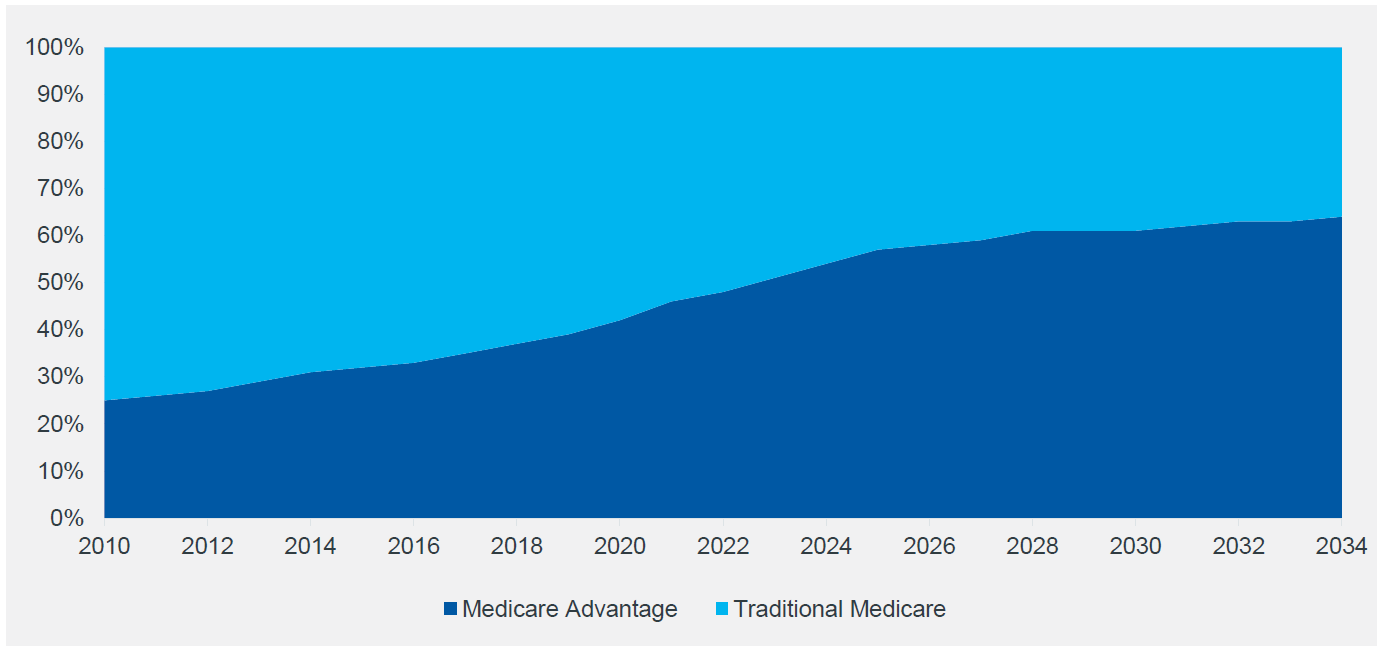
Figure 1: Share of Medicare Advantage Enrollment as % of Total Eligible Medicare Beneficiaries
Source: KFF analysis of CMS Medicare Advantage Enrollment Files, 2010-2025; Medicare Chronic Conditions (CCW) Data Warehouse from 5% of beneficiaries, 2010-2016; CCW data from 20% of beneficiaries, 2017-2020; CCW data from 100% of beneficiaries, 2021-2023, and Medicare Enrollment Dashboard 2024-2025
Rising enrollment in the Medicare Advantage program is having a significant impact. In 2024, 54% of total individuals eligible for Medicare were enrolled in a Medicare Advantage plan, as shown in Figure 1. Medicare Advantage now accounts for 46% of total net revenue received for services provided to Medicare beneficiaries, but this revenue is administered through commercial payers. For a growing percentage of hospitals, Medicare Advantage now represents more than half of their Medicare revenue.
Much of the growth in Medicare Advantage is driven by factors including no-premium plans; extra benefits offered through Medicare Advantage plans, including vision, dental, or hearing; and out-of-pocket limits. The government’s typical approach to merger analysis doesn’t fully consider the impact on populations enrolled in Medicare Advantage plans, focusing exclusively on the potential for the merged entity to negotiate higher reimbursement rates from commercial health plans generally.
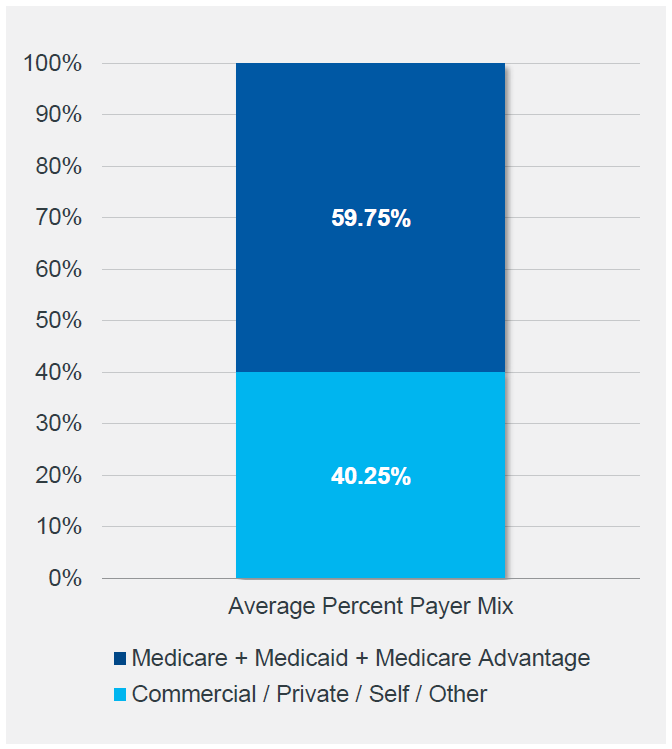
Figure 2: Average Payer Mix by Patient Days with Medicare Advantage Recategorized
Source: Kaufman Hall analysis utilizing 2023 CMS cost reports, and 2023 census Medicare Advantage enrollment figures from Current Population Survey Annual Social and Economic Supplement
When payer mix is shown by patient cohort, Medicare Advantage populations are typically included in the commercial payer mix, but this can be misleading: MA populations are not subject to price increases in the same way that the government theorizes traditional commercially insured groups might be. Further, although payer mix demonstrates payment in terms of total revenue received from different sources, it does not account for the differences among populations being served as well as the payment per day being provided to certain patients like Medicare Advantage patients.
As shown in Figure 2, using data from 2023, when Medicare Advantage days from the commercial population are properly recategorized into days supported by the Medicare and Medicaid programs, the majority of patient days are accurately attributed to patients who are insured by governmental payers.
Studies have shown that, on average, the rate paid by commercial payers is more than two times the rate paid by governmental payers. This means that, on a dollar-by-dollar basis, there is only one commercially insured patient for every 2+ governmentally insured patients. Put differently, if hospitals were breaking even overall, you’d expect roughly one commercially insured patient for every two governmentally insured patients—which isn’t far from what we see in practice. Moreover, the Medicare and Medicaid programs are designed to serve elderly and low-income populations, whose health is more vulnerable. The average length of stay of these populations is longer than that of commercially insured populations and constitutes the bulk of patient days being served by hospitals when recategorized appropriately.1
Critically, this clarification of the data demonstrates that almost 60% of patient days represent patients being served by the Medicare and Medicaid programs, who experience very few if any pricing impacts resulting from an M&A transaction.
We find that the potential acquiree had higher average percentages of governmentally insured patients than the acquirer.
Notably, going back to 2015, in the last 12 hospital transactions that the Federal Trade Commission (FTC) sued to block, we find that the potential acquiree had higher average percentages of governmentally insured patients than the potential acquirer, at 64% as compared with 60%, respectively. This finding suggests that the acquirer hospitals were not pursuing these challenged transactions to capitalize on commercial populations, which garner more revenue than government enrollees, but rather to accomplish other strategic or existential goals. As discussed below, the higher levels of governmentally insured patient days at potential acquiree hospitals suggest that the acquiree hospitals tend to face strong financial and operational headwinds. Without the ability to partner strategically, these hospitals face potential reductions in service or even closure, which deeply affects populations that are already at risk.
Vulnerable communities are more likely to be impacted by service closures if hospitals are not permitted to merge than by price increases if they are permitted to do so.
As previously noted, patients being served by the Medicaid, Medicare, and Medicare Advantage programs are by design older and/or lower income and often have more socioeconomic and health challenges. And as shown in the analysis above, governmentally insured patients comprise a large percentage of the patients served by hospitals. It is thus important to highlight differences between these groups that can lead them to be more affected by hospital and service closures.
An analysis of Kaufman Hall proprietary data for 88 hospital transactions since 2006 demonstrates that the hospitals that would have been acquired by larger health systems supported more vulnerable communities than the acquirer; their respective communities were also more vulnerable than the national average. These data corroborate the findings that potential acquiree hospitals support a greater share of governmentally insured populations, which are adversely affected when an acquisition blocked by an agency challenge leads to hospital or service closures.
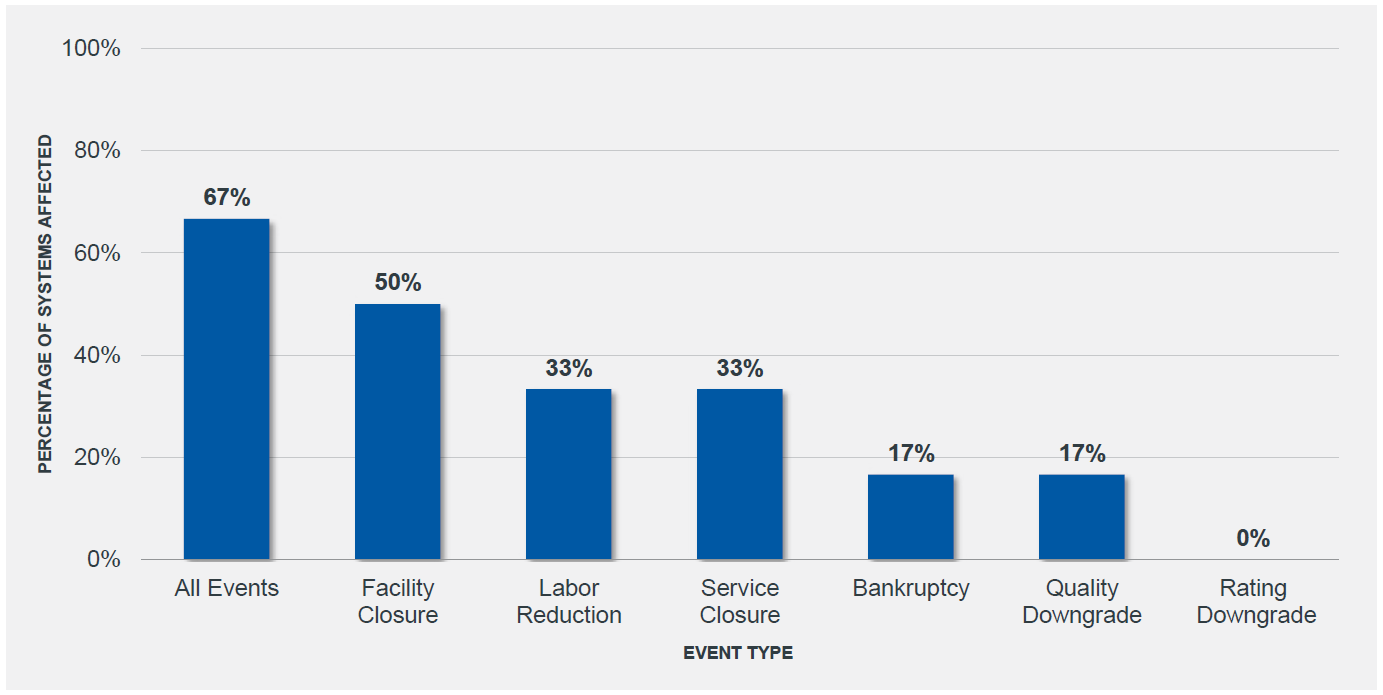
Indeed, the majority of potential acquiree health systems in the recently agency-blocked 12 transactions were affected by facility closure, labor reduction, service closure, bankruptcy, or quality downgrades within the four years prior to the proposed transaction, as shown in Figure 3. These challenges highlight the existential nature of many contemplated transactions. It is critical to recognize that blocking a transaction may have an adverse impact on communities that face restricted delivery of healthcare services.
Figure 3: Actions Affecting Target Health Systems within Four Years of Agency-Blocked Transaction
Source: Kaufman Hall analysis of public data following announced transactions
Hospital M&A transactions are driven by strategic and existential concerns.
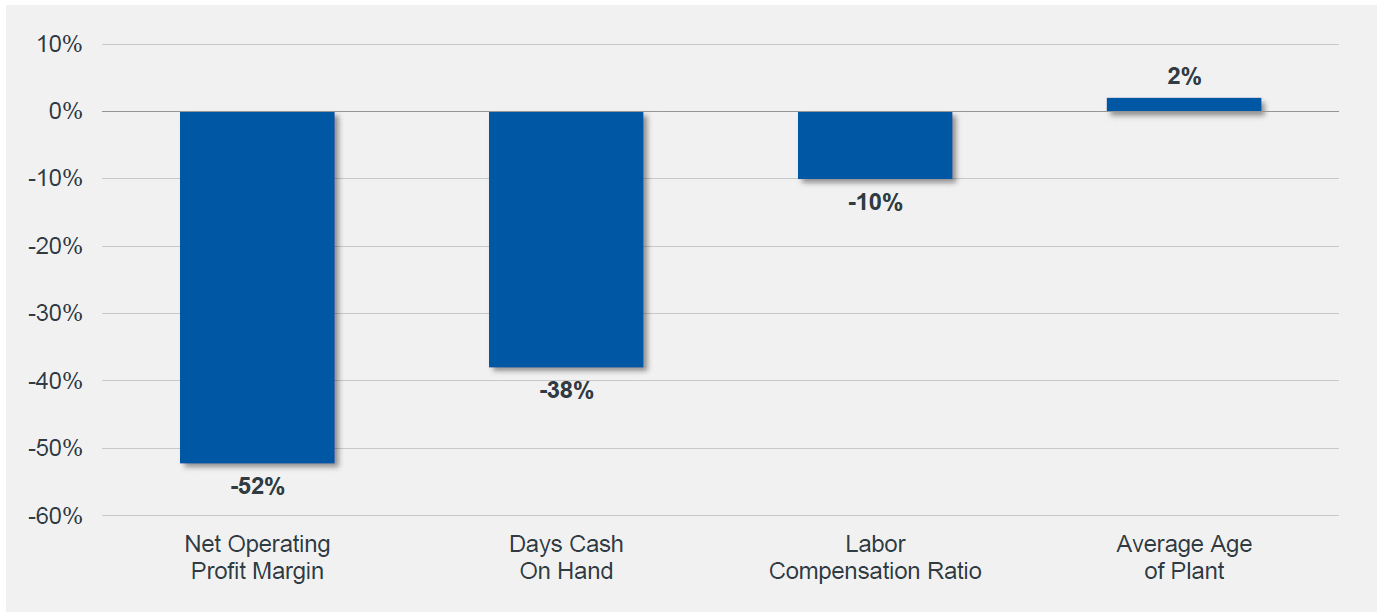
An analysis of financial performance changes after a cancelled transaction further illustrates the strategic and existential drivers of hospital M&A transactions. We evaluated 88 potential transactions from the last 10 years that were ultimately cancelled. In the year following a cancelled transaction, the potential acquiree hospitals experienced a median impact of 50% reduction in operating profit margin, a 38% reduction in days cash on hand, a 10% reduction in the labor compensation ratio, and a 2% increase in the average age of plant, as shown in Figure 4. While some of these hospitals were already facing financial headwinds, our analysis suggests that a failed partnership may accelerate decline by removing access to capital or operational expertise that could stabilize performance.
These data demonstrate the deleterious impact that cancelled transactions can have on the non-acquired hospitals, jeopardizing their ability to further continue providing services. Continued declines in operating margin and days cash on hand can lead to services being scaled back or suspended, or in extreme cases, hospitals being closed altogether. Beyond patient care, financial and operational challenges also affect caregivers, as labor reductions and declines in labor compensation ratios may be required to sustain the remaining services, and impact surrounding communities that depend on hospitals not only for care but also as an employer and source of economic stability.
Potential acquirers of financially struggling hospitals typically bring additional liquidity, especially in cases where there are large differences between the parties’ financial resources, and this additional support can ensure that services are sustained as outlined by a review of M&A transactions in 2023.2
Figure 4: Median Change Following Cancelled Transaction
Source: Kaufman Hall analysis of public data following announced transactions
Our study of two-hospital counties demonstrates the need for nuanced analysis of competitive dynamics.
One of the stated goals of challenging hospital transactions is to maintain appropriate competition, but this approach does not always account for the extent to which competition exists currently. Most (if not all) recent challenges to hospital mergers involved transactions that would have combined two or more facilities with overlapping service areas. The purported goal of these lawsuits was to preserve existing competition between the merging facilities. This rationale, however, depends on an assumption that facilities with overlapping service areas are in fact close competitors that constrain each other’s ability to raise prices. As our analysis demonstrated, this is not always the case, even in communities with only a few hospitals.
As described below, we examined the 221 counties which contain only two short-term, acute care hospitals owned by separate entities. Analyzing competition by service line, rather than overall concentration level, reveals that these hospitals often provide complementary, rather than competing, services.
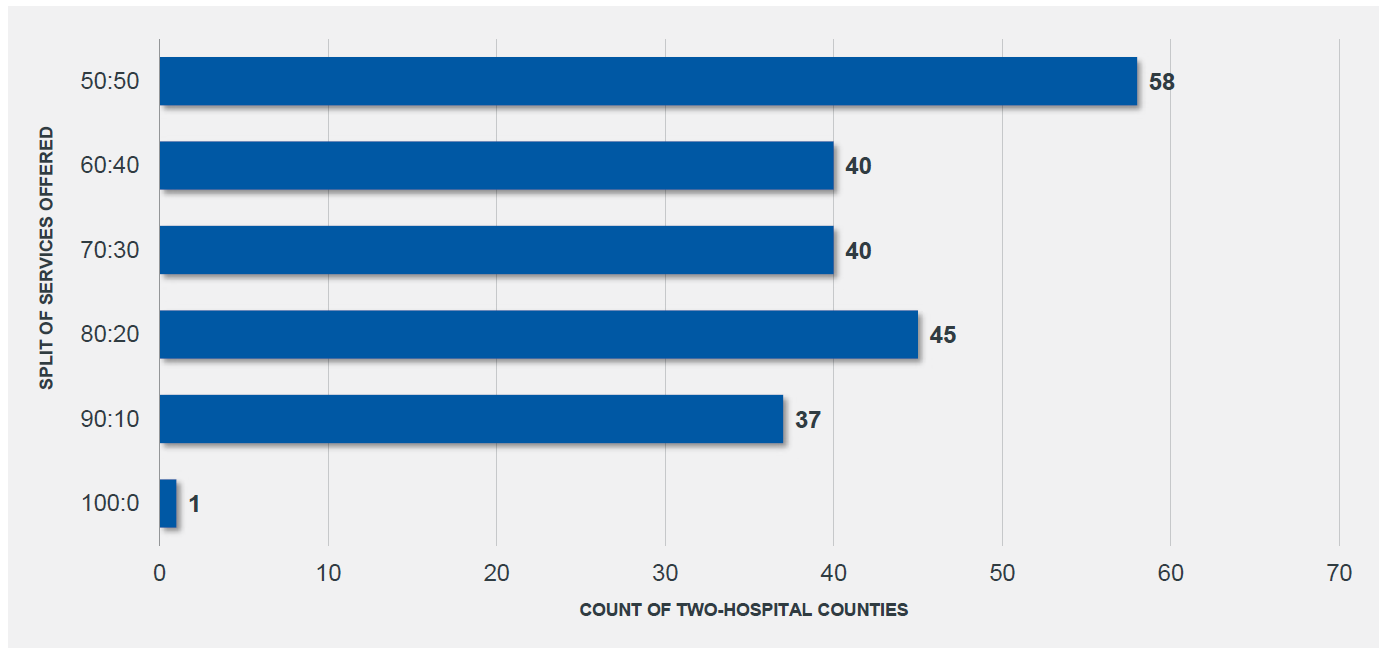
The Herfindahl-Hirschman Index (HHI) offers one approach to evaluating the competitive dynamics of hospitals in a market, but it falls short of fully capturing the complexity of competitive dynamics. In counties with two hospitals, for example, the HHI suggests significant variation in competition levels as shown in Figure 5. This is primarily due to the dynamics of a single large hospital and a single small hospital providing services in the typical two-hospital county. We find that levels of competition are varied, but few markets demonstrate balanced competition between the hospitals.
Figure 5: Number of Two-Hospital Counties by Volume Split of Services
Source: Service line volume data sourced from CMS cost reports combined with Kaufman Hall geospatial analysis
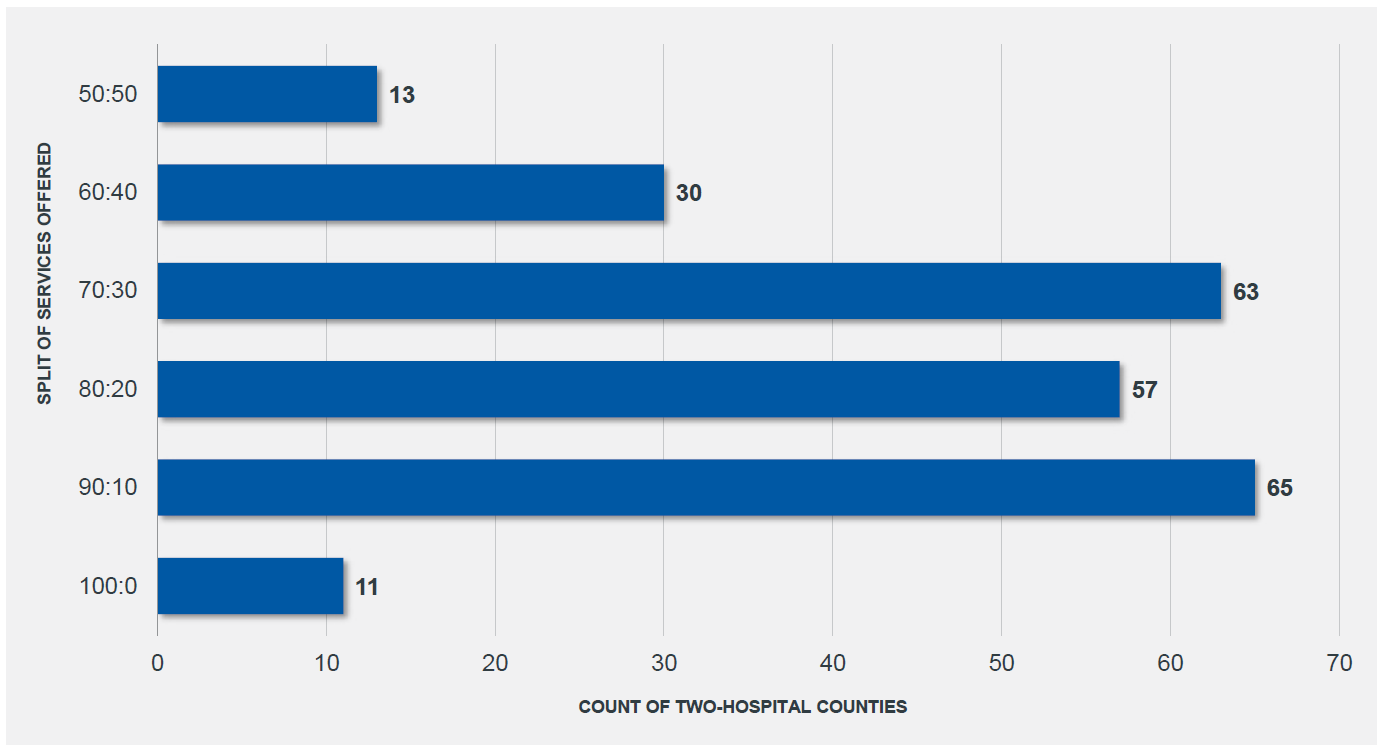
One issue with the HHI is that it does not evaluate whether the services provided by the two hospitals are complementary or competitive and therefore does not paint a full picture of the actual competitive dynamics. An evaluation of the average HHI across each service provided on an unweighted basis (i.e., looking at the average percent volume that the larger party provides across each service) gives a fuller picture, and indeed, demonstrates that when evaluating competitive dynamics across all types of services, the split between parties is even more stark. This evaluation clearly shows that in two-hospital counties, most hospitals provide complementary services that are not in direct competition, as shown in Figure 6. Even in markets with two hospitals, in other words, the competitive dynamics are more complex than simply assuming that each hospital competes directly against the other for the bulk of its services. Many hospitals have naturally developed distinct service portfolios that reflect differences in scale, capabilities, or community need—resulting in complementary, rather than competitive, dynamics.
Given that in many of these counties one hospital is in a significantly stronger financial position than the other, a transaction may ensure that a full range of services can continue to be provided in these counties and their communities.
Figure 6: Number of Two-Hospital Counties by Split of Services Offered by Service Line
Source: Service line volume data sourced from CMS cost reports combined with Kaufman Hall geospatial analysis
Conclusion
A more comprehensive analysis of hospital M&A transactions is needed to ensure not only competitive markets, but also healthy hospital markets that can sustain access to essential care. The current approach often narrows its focus to potential price impacts for commercially insured patients, even though acute care hospitals serve everyone and most patient days are attributable to Medicare, Medicaid, and Medicare Advantage populations.
A full analysis of proposed M&A transactions should weigh the many impacts, positive and negative.
Because payer mix shapes both hospital finances and community risk, antitrust analysis should evaluate impacts on all patients, especially elderly and economically vulnerable populations. It should also account for why many transactions occur in the first place. Smaller hospitals increasingly seek larger partners to stabilize operations and financial performance and maintain services. Our review of cancelled and agency-blocked transactions shows that when deals do not proceed, target hospitals often experience significant financial deterioration, which can accelerate service reductions and increase closure risk in communities that are already struggling. Finally, merger review should reflect real-world competitive dynamics. In many communities, hospitals offer complementary service portfolios rather than directly competing service by service. A full analysis should weigh the potential benefits and harms if a transaction proceeds, and also the likely consequences if it does not proceed, including reduced access to care for the patients and communities most at risk.
Qualifications, Assumptions and Limiting Conditions (01.30.24):
All information, analysis, conclusions, and data contained in this document are provided “as-is/where-is” and “with all faults and defects.” Neither Kaufman Hall nor any third-party sources make any representations or warranties to you, whether express or implied, or arising by trade usage, course of dealing, or otherwise. This disclaimer includes, without limitation, any implied warranties of merchantability or fitness for a particular purpose (whether regarding the data or the accuracy, timeliness or completeness of any information in this document), non-infringement, or any implied indemnities. The findings contained in this document may contain predictions based on current data and historical trends. Any such predictions are subject to inherent risks and uncertainties. Past performance is not necessarily indicative of future results. Kaufman Hall accepts no responsibility for actual results or future events. The opinions expressed herein are valid only for the purpose stated herein and as of the date of this document. All decisions in connection with the implementation or use of advice or recommendations contained in this document are the sole responsibility of the client. In no event will Kaufman Hall be liable to you for damages of any type in connection with this document, whether known or unknown, foreseeable or unforeseeable.
Notes
- Englum BR, Hui X, Zogg CK, Chaudhary MA, Villegas C, Bolorunduro OB, Stevens KA, Haut ER, Cornwell EE, Efron DT, Haider AH. Association Between Insurance Status and Hospital Length of Stay Following Trauma. Am Surg. 2016 Mar;82(3):281-8. doi: 10.1177/000313481608200324. PMID: 27099067; PMCID: PMC5142530. [back^]
- Hospital and Health System M&A in Review: Financial Pressures Emerge as Key Driver in 2023. Kaufman Hall. [back^]
© 2026 Kaufman, Hall & Associates, LLC. All Rights Reserved. This report may not be mass produced or modified without the express written consent of Kaufman, Hall & Associates, LLC.