

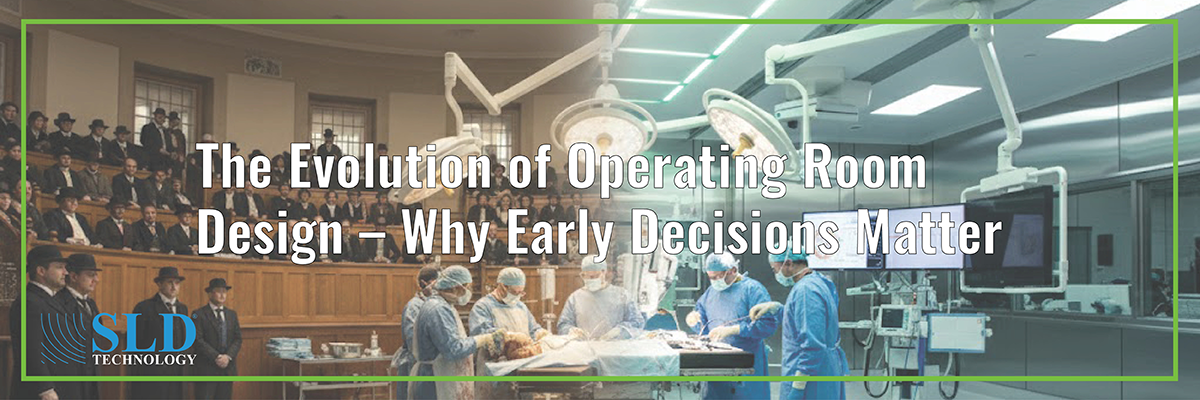
The Evolution of Operating Room Design – Why Early Decisions Matter | Webinar
Event Format
Date
Thu, Apr 02, 2026, 12:00 PM CDT – Thu, Apr 02, 2026, 01:00 PM CDTType
Event Host
Open To
Description
This presentation will give the attendee a historical perspective on operating room design and its evolution to improve infection prevention while serving as a platform to perform more advanced surgical procedures. While current FGI guidelines and ASHRAE 170 standards establish a minimum level of contamination performance, it is far below that used in cleanrooms for many years.
Modern laminar air flow design can greatly improve this situation and can be combined with state-of-the-art decontamination technologies such as visible light to create a cleaner, safer environment for patients. Peer-reviewed, clinical evidence related to both subjects will be presented to support this perspective.
This session will conclude with a discussion of how pre-fabricated, modular construction can improve performance and constructability of operating rooms allowing healthcare providers to bring their operating rooms online and operational faster and with greater cost certainty. To fully realize these benefits, critical decisions must be made early in the design and construction process. Attendees will learn about these key decisions and which stakeholders are needed for this purpose.
Learning Outcomes
Attendees will learn how hospital facilities, engineering and operations teams can:
- Summarize the key advances in operating room design and how they improve patient safety.
- Identify the gaps between current guidelines and standards and best practices derived from other industries.
- Understand the impact of airflow design and supplemental technologies to reduce contamination in environment.
- Identify the benefits of modular, pre-fabricated construction upon the performance and constructability of operating rooms.
- Realize the decisions which need to be made early in the design process and the key stakeholders involved to optimize the benefits of modular, pre-fabricated construction
Speakers
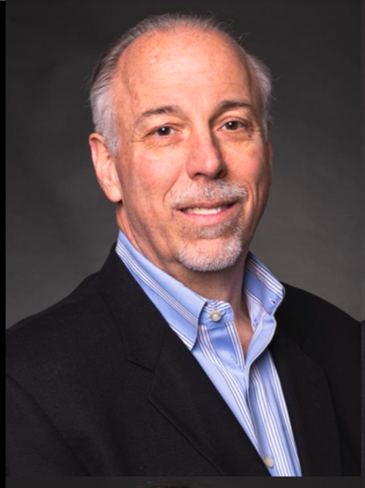 Clifford J. Yahnke, Ph.D. is Chief Science Officer at SLD Technology and received his B.S. in Engineering Physics from the Illinois Institute of Technology and his Ph.D. in Physics from Northwestern University. He joined SLD Technology in 2024 bringing over 30 years of photonics and healthcare experience in a range of fields related to defense, telecommunications, radiation oncology, medical imaging, analytical instruments, and surgical lighting. As one of the inventors of Visible Light Decontamination (VLD), Dr. Yahnke has led its development and introduction into healthcare facilities across the US where it is used in over 1,000 locations today. Widely regarded as the industry expert on visible light decontamination, he has authored numerous articles on it and led numerous studies demonstrating its ability to improve patient safety. In 2021, Dr. Yahnke was part of the team whose groundbreaking research into SARS-CoV-2 decontamination using visible light was published in Nature-Scientific Reports. His current research interests are focused on airflow in the operating room and the role of contaminated air in surgical site infections
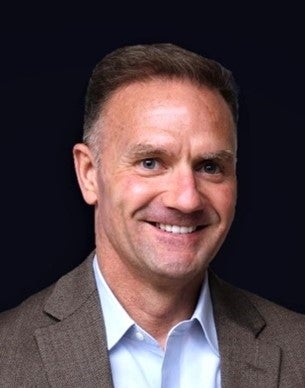 Andrew Hall, is SVP of Strategic Accounts at SLD Technology. For over 30 years, Andrew has been in a technical sales role with many top-tier cleanroom architectural and mechanical equipment manufacturers. He holds a B.S. degree in Mechanical Engineering from the University of Rochester.
A career in custom engineered, modular, air management systems for controlled environments in both the Semiconductor and Life Science industries has provided Andrew with a broad knowledge base in clean space design and the proper application of laminar flow systems.
As a past member of the International Society of Pharmaceutical Engineers (ISPE) in the Biopharma market segment, Andrew developed his expertise in microbial contamination control and the principles of air filtration. Currently, Andrew is a member of New England Healthcare Engineers’ Society (NEHES) and the Association of Medical Facility Professional (AMFP), speaking at regional events around the country. Andrew is also a Course Instructor for both AIA and the Practicing Institute of Engineers (PIE) for continuing education units.
At SLD Technology, Andrew’s responsibilities include supporting healthcare professionals, market channels and strategic partners, to optimize the utilization of prefab/modular laminar airflow systems in critical environments.
Please Note: This is a Sponsored Webinar and is not eligible for CEUs.
DISCLAIMER: The views expressed by presenters in this program should not be construed as directly representing the views of the American Society for Health Care Engineering (ASHE). ASHE does not endorse any products or services promoted in this program. By registering, you agree ASHE can share your contact information with the webinar sponsor.
Sponsored By